
Meta-confused about Metacognition
Getting meta about metacognition

As the (slightly modified for personal taste) proverb goes:
“Give a girl a tofu sandwich and she is full for a day. Teach that girl how to cook the tofu sandwhich, and she is full for many days (until she gets sick of said sandwhich).”
Teaching someone how to do something is better than just doing it for them. Extended to learning, teaching someone how to learn means that they can keep learning new content on their own. This awareness of how you learn is often referred to as metacognition.
Seems simple enough right? Well, it is actually a real head-scratcher (for me at least). I’ll start off with some formal definitions of metacognition and then discuss some of the difficulties with teaching students metacognitive strategies.
This post is part of my summer CS Education Research (CSER) series. All summer I am co-moderating a CSER reading group and will be using these blog posts to summarize discussions and thoughts.
Today’s post mainly draws from a recent publication by Prather et al. titled: “What Do We Think We Think We Are Doing?: Metacognition and Self-Regulation in Programming.”
Metacognition
As defined by Prather et al.:
Metacognition tends to be the term used to describe knowledge about one’s own cognitive control, including identifying strategies that have been successful or unsuccessful in the past, monitoring emotions and self-efficacy, and evaluating the validity of metacognitive knowledge based on feed-back.
So metacognition is an awareness of ways in which you have learned in the past.
When applying metacognition to the problem at hand, the term is called self-regulation. Again, Prather et al.:
…self-regulation tends to be the term used to describe the process of executing cognitive control during a learning or problem-solving task.
Both of these terms are forms of cognitive control. Why am I introducing all these terms? Well, for me, I had only heard of metacognition and the introduction of self-regulation into my lexicon really helped distinguish metacognition prior-/post- learning and metacognition during learning.
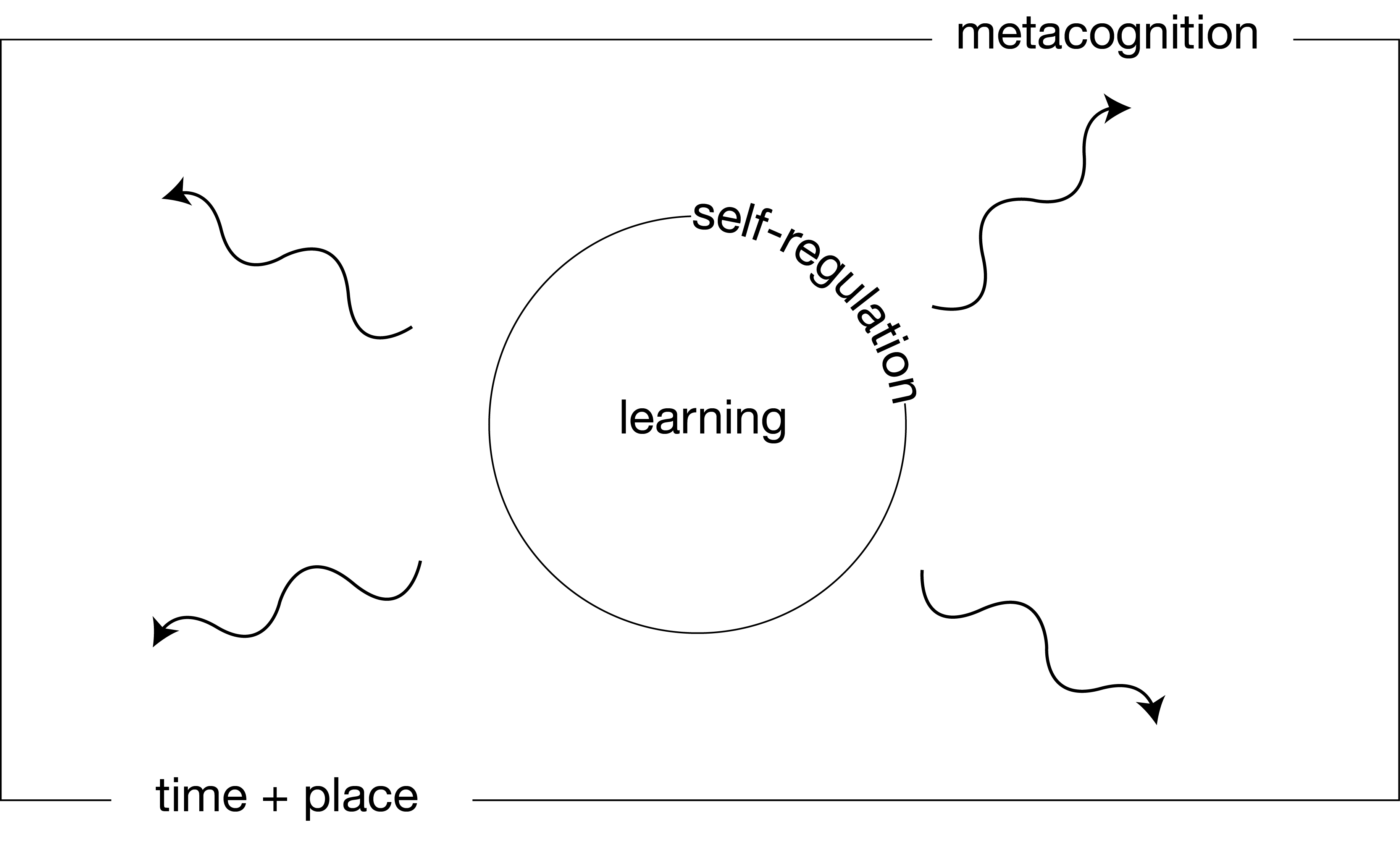
And like all nebulous concepts about how the mind works, there are different theories that highlight different aspects of the phenomenon. In our reading group, we had trouble deeply connecting with any of the theories presented in the paper but recognized the value of having them all in one place for future use in experimental set-ups.
A major issue with understanding metacognition is that it is an internal process and thus hard to measure. The paper reviews both instruments for measuring metacognition and tools to help students grow their metacognition. Sounds great right? The problem is that there are mixed results.
In a paper outside of the study, “Exploring Student Behavior Using the TIPP&SEE Learning Strategy,” the authors used scaffolding methods to aid students in metacognitive thinking before working on a problem. While the technique helped students with the given problem, the researchers could not confirm that it supported the development of metacognitive abilities. What gives? Seems like teaching and learning are difficult, who would’ve thunk? :upside_down_face: An insightful comment made by a fellow reading group participant was that there seems to be an element of practice that is relevant for learning about metacognition. Leaving teachers and researchers where? That more practice with explicit metacognitive strategies might stick if they are practiced enough?
And this is where I will leave you, my fellow reader. I hope you’re not as meta-confused as I am about cognitive control. If you come across more readings please tweet at me, I would love to discuss them!